
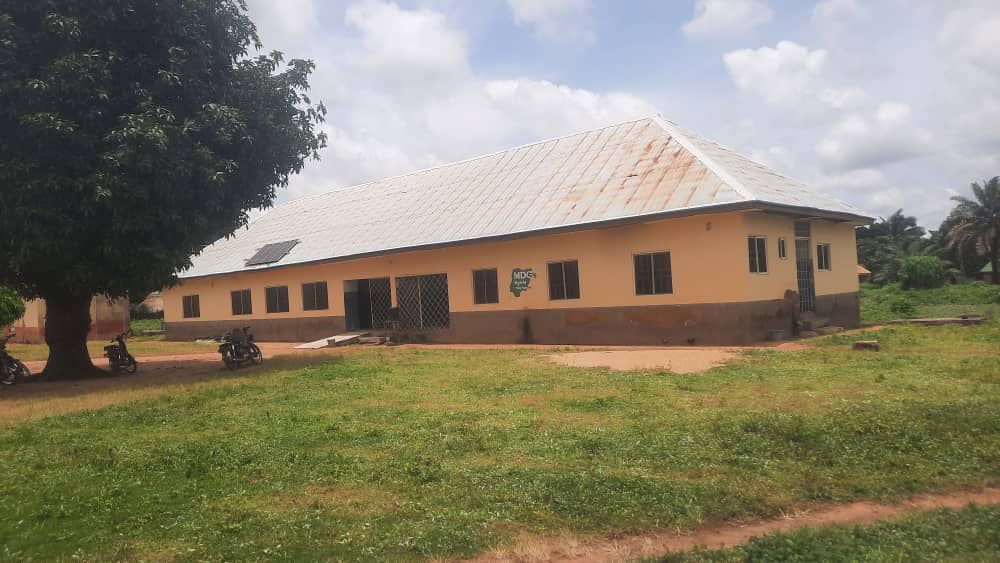
Taraba’s PHCs have equipment on paper, but patients still face gaps

Taraba State has budgeted hundreds of millions of naira for medical equipment, drugs and hospital consumables. But assessments of primary healthcare centres across the state show that spending plans and project labels do not always translate into fully equipped facilities capable of delivering dependable care.

In its 2024 approved budget, the state allocated ₦500 million for medical equipment and hospital consumables under the Ministry of Health. A further ₦24.95 million was earmarked for
drugs, medical equipment and consumables under the Taraba State Essential Drugs Programme, while ₦81.8 million was allocated for high-tech and modern medical equipment at the Taraba State Specialist Hospital in Jalingo.
These allocations show what the government planned to spend. They do not, by themselves, show what was eventually purchased, where it was delivered, whether it was installed or whether it is being used to treat patients.
That gap becomes clearer in the field.
Orodata assessed 14 primary healthcare centres in Taraba. All eight of them, revitalisation work was recorded as completed. Work had not started at three facilities, was stalled or abandoned
at two, and was ongoing at one.
The assessment also recorded visible defects or substandard work at all 14 facilities. Nine reported shortages of medical supplies or personal protective equipment, while eight had no functional ambulance.
Medical equipment or furniture supplied under the project was recorded as present and functional at eight facilities. At five facilities, it was not recorded as present and functional, while the status was not observed at one.Source: Orodata fieldwork.
The findings do not establish that equipment supplied to Taraba’s PHCs is universally unused. They show that the existence of a budget allocation, a delivery claim or a completed project does not necessarily mean that a facility has the equipment, infrastructure and support required to provide safe and reliable care.
At Barkin Dutse Primary Healthcare Centre in Ardo Kola Local Government Area, revitalisation work was recorded as not started.
The facility was open to patients, but no project-supplied medical equipment or furniture was recorded as present and functional. The assessment also
recorded shortages of medical supplies or personal protective equipment, and the facility had no functional ambulance.
Some services, including antenatal care, routine immunisation and pharmacy services, were recorded as existing before the intervention.
Barkin Dutse therefore presents a familiar problem in public health spending: a facility may remain open and provide basic services, while the project intended to improve its capacity has not begun.
The situation was similar at Jalingo Primary Healthcare Centre. The facility was operational, but the revitalisation work was recorded as not started. Project-supplied equipment or furniture was not recorded as present and functional.
The facility had no functional ambulance, and neonatal resuscitation equipment was not recorded as available.
The field assessment recorded antenatal care, routine immunisation and pharmacy services at the facility, but noted that these services existed before the reported intervention.
At Akate Primary Healthcare Centre in Donga Local Government Area, the revitalisation work was recorded as stalled or abandoned. The facility was open to patients and had a delivery bed and neonatal resuscitation equipment, but a fetal heart-rate monitor was not recorded as available.
Medical-supply or personal protective equipment shortages were recorded, and the facility had no functional ambulance.
Field assessors also recorded visible defects or substandard work.
The presence of a delivery bed does not mean that a facility has the complete equipment needed to provide safe maternity care. Without equipment such as a fetal heart-rate monitor, health workers may have limited capacity to monitor pregnant women and detect complications early.
Mararaba Primary Healthcare Centre, also in Donga LGA, presents a different picture.
The project was recorded as stalled or abandoned, but medical equipment or furniture supplied under the project was recorded as present and functional.
The facility had no functional ambulance, and visible defects or substandard work were recorded. Antenatal care, routine immunisation and pharmacy services were available.
Unlike several of the other facilities assessed, medical-supply or personal protective equipment shortages were not recorded.
Mararaba shows why the condition of a project cannot be judged by a single indicator.
Equipment may be present even when construction or revitalisation work is incomplete.
That raises further questions about whether the equipment is protected, maintained and supported while the wider project remains unfinished.
At Zango Kombi Primary Healthcare Centre in Ardo Kola LGA, work was still ongoing when Orodata conducted its assessment. The facility was open to patients, but project-supplied
equipment or furniture was not recorded as present and functional.
Delivery beds, fetal heart-rate monitors and neonatal resuscitation equipment were recorded as available.
However, the facility had no functional ambulance, and visible defects or substandard work were observed.
The facility also had no reported shortage of medical supplies or personal protective equipment at the time of the assessment.
But an ongoing project cannot be treated as a completed intervention. Until the work is finished and the relevant equipment is installed and functional, it is difficult to determine the facility’s final operational capacity.
KUMBO Primary Healthcare Centre in Donga LGA was recorded as having completed revitalisation work. Yet project-supplied medical equipment or furniture was not recorded as
present and functional.
The facility had a delivery bed, fetal heart-rate monitor and neonatal resuscitation equipment, but medical-supply or personal protective equipment shortages were recorded. It also had no functional ambulance.
Field assessors observed visible defects or substandard work.
KUMBO raises a basic but important question: what does completion mean in the project records? If construction work is marked complete but equipment supplied under the project is not present and functional, then the project may have delivered a physical structure without
delivering the full service capacity expected from it.
At Kofai Primary Healthcare Centre in Ardo Kola LGA, the project was recorded as completed, and project-supplied equipment or furniture was recorded as present and functional. The facility
also had a functional ambulance.
But the assessment still recorded medical-supply or personal protective equipment shortages. A fetal heart-rate monitor was not recorded as available, although a delivery bed and neonatal
resuscitation equipment were present.
Visible defects or substandard work were also recorded.
Kofai demonstrates that a completed project may still leave specific clinical gaps. A facility can have an ambulance and several important pieces of equipment while lacking other items needed to monitor pregnant women and manage deliveries safely.
Mafindi Primary Healthcare Centre in Jalingo LGA was also recorded as completed. The facility had a functional ambulance, but the status of project-supplied medical equipment or furniture was not observed.
The assessment did not record shortages of medical supplies or personal protective equipment.
However, neither a fetal heart-rate monitor nor neonatal resuscitation equipment was recorded as available. Visible defects or substandard work were also observed.
The distinction between “not observed” and “not available” is important. The record does not prove that the equipment was missing. It shows that the field assessment could not verify its presence and functionality.
That uncertainty should prompt a dated equipment inventory and a fresh facility-level inspection, not an assumption that the intervention was successful.
At Gayam Primary Healthcare Centre in Donga LGA, the project was recorded as completed, and project-supplied equipment or furniture was recorded as present and functional.
The facility had a delivery bed, fetal heart-rate monitor and neonatal resuscitation equipment.
However, medical-supply or personal protective equipment shortages were recorded, and the facility had no functional ambulance. Field assessors also observed visible defects or substandard work.
Gayam illustrates why equipment availability must be assessed alongside emergency readiness.
A PHC may have important maternity equipment but still lack the transport needed to refer patients when complications exceed the facility’s capacity.
At Iware Primary Healthcare Centre in Ardo Kola LGA, revitalisation work was recorded as completed. Project-supplied medical equipment or furniture was also recorded as present and functional. A delivery bed, fetal heart-rate monitor and neonatal resuscitation equipment were available.
Medical-supply or personal protective equipment shortages were not recorded. But the facility had no functional ambulance, and field assessors recorded visible defects or substandard work.
Iware shows that equipment delivery is only one part of operational readiness. A facility may have important equipment and still require corrective work, maintenance and reliable referral support before it can be considered fully prepared to serve patients.
The evidence from these facilities does not show that Taraba has bought nothing or that every intervention failed. It shows that the state’s equipment story cannot be understood through budget allocations and project descriptions alone.
The 14 Orodata assessments reveal an uneven picture. Some facilities were open but had not received the planned intervention. Some had completed projects but still lacked equipment or emergency transport.
Some had equipment but continued to report supply shortages or visible construction defects. In one facility, the status of project-supplied equipment could not be verified.
The state’s revitalisation records and the field evidence are not necessarily contradictory.
Equipment may have been supplied after a field assessment. Some facilities may have received selected items while other equipment remained unavailable.
A project may have been classified as completed even though defects or operational gaps remained.
But these possibilities can only be resolved through facility-level records.
For each item purchased with public funds, the public should be able to establish what was bought, how much was paid, which facility received it, when it was delivered, whether it was installed, whether it works, who was trained to operate it and how often it is used.
A budget allocation records an intention to spend. A procurement document records a purchase. A delivery note records the movement of an item. None of these, on its own, proves that a functioning machine is available to patients. That proof must come from the facility.
It must be possible to walk into a named PHC and verify the equipment inventory, inspect the condition of the items, confirm that health workers know how to use them and establish whether patients are receiving services with them.
For Taraba’s patients, the question is not simply whether equipment was budgeted, purchased or distributed. It is whether the equipment is there, whether it works and whether a trained health worker is using it to provide care.
That is the point at which public spending becomes healthcare.
By Fabian Ekeruche.
“_This story was produced for the Follow the money Investigative Programme and supported by the Africa Data Hub and Orodata Science_.”


